Using straw to produce plastic — this is precisely the core focus of the project that the Systems Biotechnology team led by Christoph Wittmann, together with its research and industrial partners, has been carrying out since early February 2026.
In the “LiGNUM” project, funded by the German Federal Ministry of Education and Research (BMBF), researchers genetically engineered bacteria to enable them to utilize by-products from straw pulp production to manufacture key precursor materials for nylon (polyamide).
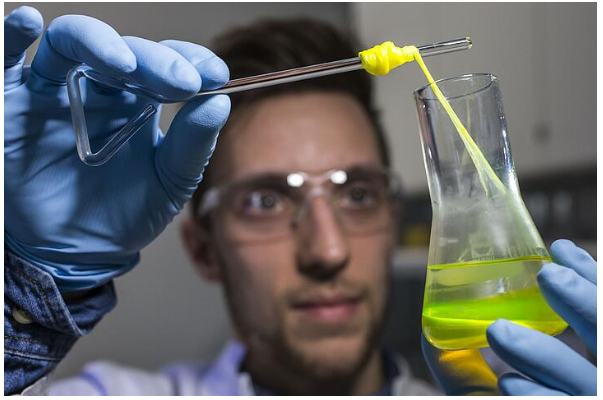
Transforming industrial by-product streams into reusable raw materials lies at the heart of the circular economy. The “LiGNUM” project puts this principle into practice: using microorganisms to convert material streams from pulp production into key raw materials for new plastics, thereby replacing petroleum-based feedstocks. Even more encouraging is that the project is both locally rooted and regionally networked through cross-sector collaboration.
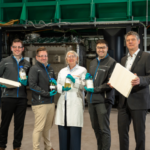
The project is driven by an interdisciplinary research consortium coordinated by Christoph Wittmann of Saarland University, Germany. Over a three-year period, partners from academia and industry will jointly develop sustainable nylon (polyamide) and evaluate its industrial feasibility. Christoph Wittmann explains: “Our consortium aims to produce industrial nylon (polyamide) in a sustainable manner, up to pilot scale.” The LiGNUM consortium, funded by the German Federal Ministry of Education and Research (BMBF), was launched in February 2026. In addition to Saarland University, the partners include the German Biomass Research Center (DBB), the Leibniz Institute for Agricultural Engineering and Bioeconomy (IMB), as well as industrial partners Tecnaro GmbH (a specialist in bio-based polymers) and Essity Operations Mannheim GmbH.
The starting materials required for the LiGNUM project originate from by-products of pulp production. The partner Essity uses agricultural straw as a raw material for tissue production at its pulp mill. This process generates a lignin-based material stream marketed under the brand name “InnoLig+.” Christoph Wittmann notes: “At Essity’s Mannheim site alone, tens of thousands of tons of this material are produced annually—volumes large enough to play a significant role in industrial applications.” The project aims to utilize this bio-based material stream to produce plastic precursors through biotechnological processes.
Christoph Wittmann emphasizes: “At present, the key raw materials for nylon (polyamide) are primarily produced through petrochemical routes—based on fossil resources and highly energy-intensive processes. The LiGNUM project follows the principles of ‘green chemistry’: by using microorganisms to convert bio-based materials into fundamental plastic building blocks, it has the potential to fundamentally replace petrochemical production pathways.”
Project Overview:
“LiGNUM – Microbial Upgrading of Lignin-Based Material Streams for Sustainable Biomaterials” is funded by the German Federal Ministry of Education and Research (BMBF) with approximately €1.55 million, of which around €940,000 is allocated to Christoph Wittmann’s team at Saarland University. Project partners include the German Biomass Research Center (DBB), the Leibniz Institute for Agricultural Engineering and Bioeconomy (IMB), Tecnaro GmbH, and Essity Operations Mannheim GmbH. The project commenced on February 1, 2026, and has a duration of 36 months.